
Searching Madison County Criminal Dockets
Search ARCourts is the free public entry point for Madison County criminal docket data. Know the case or citation number? Choose Cases. A name works better under Participants. Type Madison in the County field, and add a Court Location only if you know the filing court. An exact case number beats a name search, since it cuts out near matches. The basic search needs no login. Even so, some district cases and old paper files never appear online.
Pick the court before anything else. Felonies belong to Madison County Circuit Court. County and city misdemeanors start in the Madison County District Court, Huntsville Department. A blank result does not mean the case is gone. Clear filters, drop a middle name, try both Cases and Participants, and double-check the court level before you call the clerk.
- Open Search ARCourts and select Cases or Participants.
- Enter the exact number or at least three useful name characters, then select Madison County.
- Compare court, caption, case type, filing date, and status before opening a result.
- Read Case Events for settings and Docket Entries for later changes or filed orders.
- Confirm an important date or official outcome with the proper Madison County clerk.
Madison County Criminal Charges and Pleas
A Madison County criminal Case Summary lists each charge on its own line. One offense block can carry a charge number, an offense date and name, the felony or misdemeanor level, the statute, the charged party, a citation number, the plea and plea date, the disposition with its date, and added detail. Read the rows, not just the headline. A single case may hold several charges, and each one can end differently.
The official Search ARCourts sample Case Summary shows the interface fields the public sees on a criminal docket record.
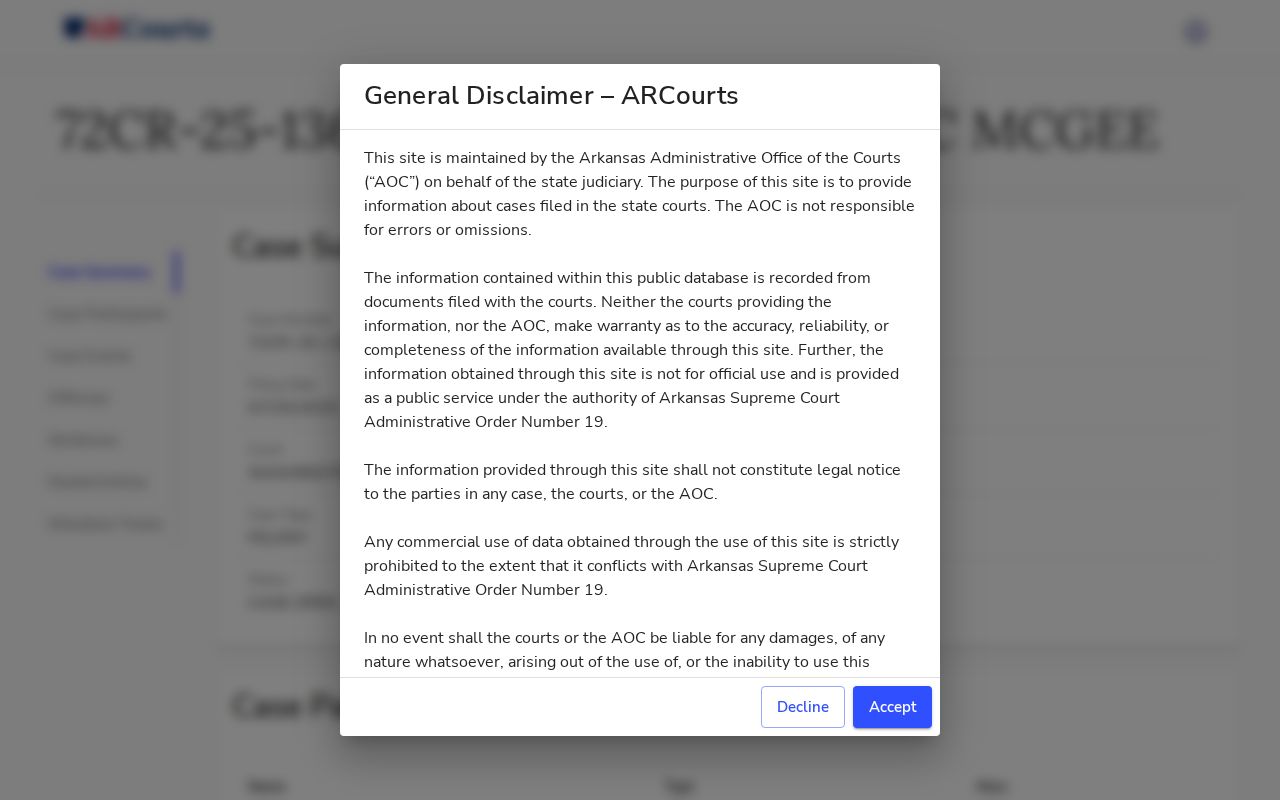
That official page shows how the Case Summary, Case Events, and Docket Entries fit together as parts of one Madison County criminal docket. A linked document can add detail. A document row marked "None" only means the public display offers no link there.
Inside a Madison County Criminal Docket
The statewide Contexte system lays out Madison County criminal docket information in a fixed order. The header names the case, court, filing date, case type, and status. Participants may include the judge, the prosecuting attorney, the defendant, and counsel. Case Events track hearings. Docket Entries build the dated filing and action history. Offense and sentence blocks add charge-specific facts when the public record holds them.
| Case identity | Case number, filing date, court, case type, status, and caption. An official portal example is 10CR-09-100, not a verified Madison-only format. |
|---|---|
| Charges | Offense name, level, statute, offense date, citation, plea, and disposition fields where recorded. |
| Case events | Date and time, event label, room, location, and judge for available settings. |
| Docket entries | Filing time, description, detail, filing name, and any public document link. |
| Sentences | Sentence description, length, suspended or served values, dates, and linked offense where displayed. |
The docket has no universal balance block. Fines, restitution, and clerk balances cannot be read from a blank field or a sentence row. The portal also warns that its Case Summary is not the official court record.
Madison County Criminal Status and Disposition
Status and disposition answer different questions on a Madison County criminal docket. Status covers the whole case. It tells you whether the matter is pending or closed. Disposition is charge by charge. A closed label says nothing about each count's result. Match every listed charge with its plea, disposition, and date. When the exact result matters, pull the judgment or sentencing order.
The official disposition sample shows the fields Arkansas's shared interface can display.
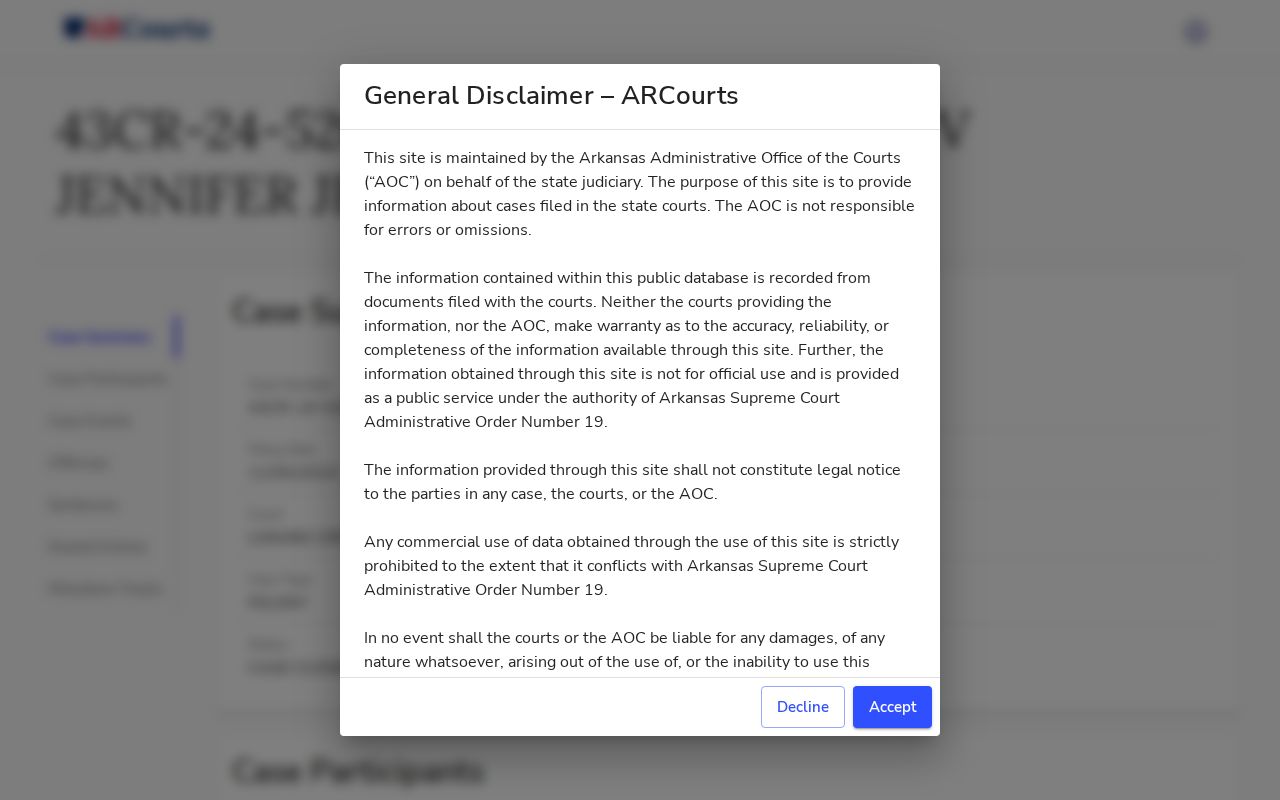
A sentence row can list the length, suspended length, served value, signed date, start date, probation dates, and whether terms run together or one after another. It still does not replace the filed sentencing order. For a formal outcome, ask the Madison County Circuit Clerk for the judgment or a certified docket.
How a Criminal Case Moves
A Madison County criminal docket builds up as the prosecutor, defense, clerk, and judge file or record each step. The same Fourth Circuit system holds entries for criminal information, warrants issued or served, entries of appearance, discovery motions, bond entries, indigency affidavits, plea and arraignment orders, subpoenas, hearing notices, continuance motions and orders, scheduling orders, trial activity, and status reports. The exact order varies with the case and the court.
Docket flow: Filing › Arraignment › Pretrial › Plea or Trial › Disposition › Sentencing
District judges handle the early stages of a felony. They act on warrants, reasonable-cause findings, Rule 8.1 first appearances, rights advice, appointed-counsel questions, release decisions, and preliminary hearings before the charge reaches Circuit Court. None of that turns the felony into a District Court trial case. Track the Madison County court name. Track the newest filing too. Do not assume the first court shown holds everything.
Madison County Criminal Event History
A setting on a Madison County Case Events block is not always the last word. Docket Entries can log the same event as SCHEDULED, then CONTINUED, then HELD. Check the latest date against a notice, scheduling order, or continuance order. An old event line can linger. The first date found may point to a hearing that already moved.
- SCHEDULED
- The court placed an event on the calendar.
- CONTINUED
- The court moved the event; look for a later scheduled date.
- HELD
- The event occurred, but the label does not mean the whole case ended.
- Disposition
- The recorded resolution of a charge, with a date where supplied.
Search ARCourts states plainly that it is not legal notice. Confirm a critical Circuit Court date with the Circuit Clerk at 479-738-2215. For a Huntsville Department misdemeanor, call the District Court Clerk at 479-738-2911.
Courts That Hold Criminal Dockets
Two courts split the criminal docket work in Madison County. Felonies and other general-jurisdiction cases sit with the Circuit Court. That court is part of the Fourth Judicial Circuit. Circuit Clerk Tiffany McDaniel keeps those records at 201 W Main Street in Huntsville. Her office takes mail at PO Box 626, Huntsville, AR 72740, and answers the phone at 479-738-2215. For the structure and divisions, the county Circuit Court page lays it out.
Misdemeanors and traffic matters run through the District Court's Huntsville Department. Chief District Court Clerk Pamela Garrett holds those dockets at 208 E War Eagle Avenue. Mail goes to PO Box 549, Huntsville, AR 72740, and the phone is 479-738-2911. That court also handles early steps in felony cases. One caution applies. The County Clerk is a separate office and does not keep criminal court records.
| Court | Criminal docket role | Clerk channel |
|---|---|---|
| Madison County Circuit Court | Felonies, filed Circuit prosecutions, and Circuit appeals | Circuit Clerk, 479-738-2215 |
| Huntsville Department | Misdemeanors, traffic, and preliminary felony functions | District Court Clerk, 479-738-2911 |
Madison County Criminal Appeals to Circuit
A misdemeanor decided in District Court can move up to Circuit Court on appeal. The Arkansas case system labels it MISDEMEANOR APPEAL. You may also see an entry like “APPEAL FILED IN CIRCUIT COURT,” with a certified docket sheet from the lower court attached. It looks like a felony case at first glance. Read the court label and case type closely. An appeal travels a different path than a fresh prosecution, even though both live in the same Circuit Court system. The official Arkansas misdemeanor-appeal sample shows these exact interface labels on a real case page.
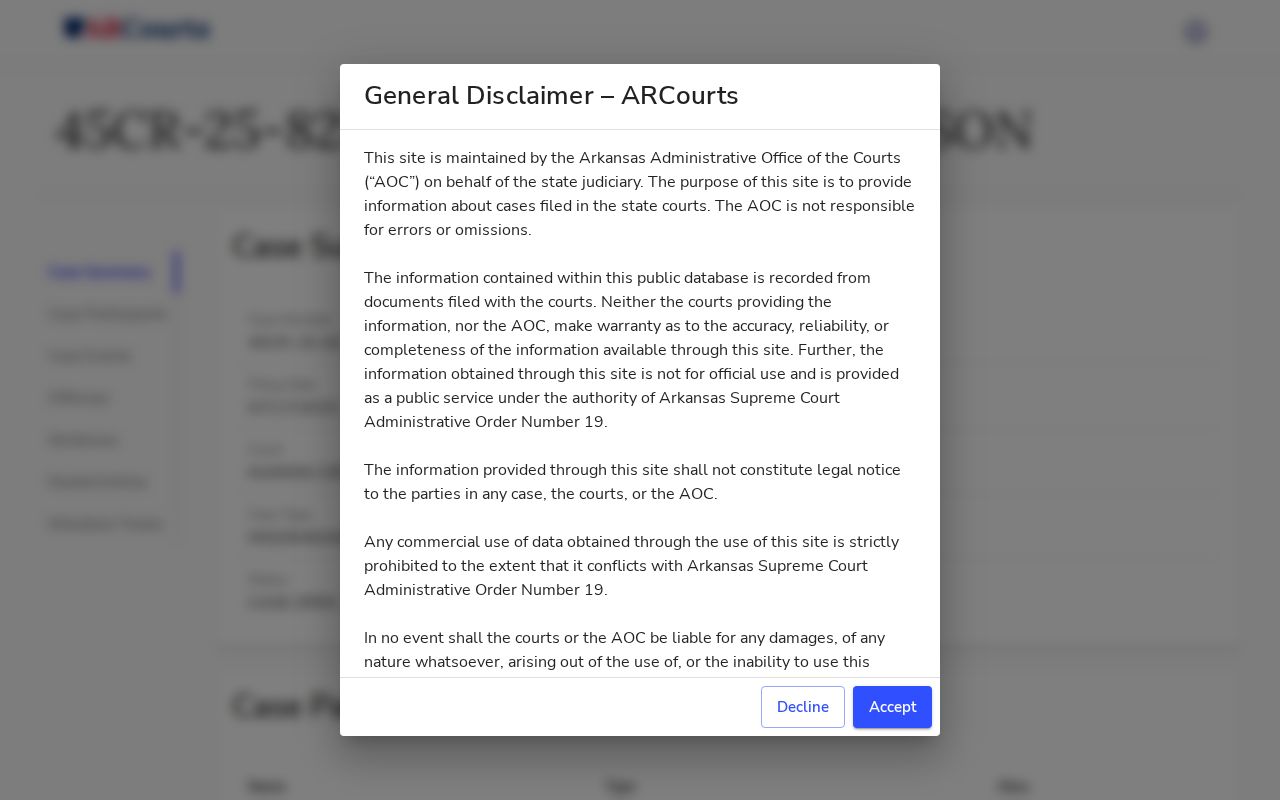
That example page shows how a lower-court record can land inside a Madison County Circuit docket. It says nothing about appeal deadlines. Arkansas rules set those limits, and the Madison County clerk can confirm the current filing period. Guessing at a deadline is never the safe move.
Sealed Dockets and Public Access
Public access to a Madison County criminal docket starts with Arkansas Supreme Court Administrative Order 19. The order opens most records. But it carves out material shielded by federal law, state statute, court rule, or court order. The protected list covers personal identification numbers, sealed or expunged case information, judicial work product, and certain addresses. Redaction duty falls on filers and clerks under Administrative Order 19.1. So the docket you see may omit confidential details. A sealed, unredacted copy sits with the court. The official legislative history of Arkansas's criminal-record sealing law gives background on the Comprehensive Criminal Record Sealing Act. The page itself provides that history.
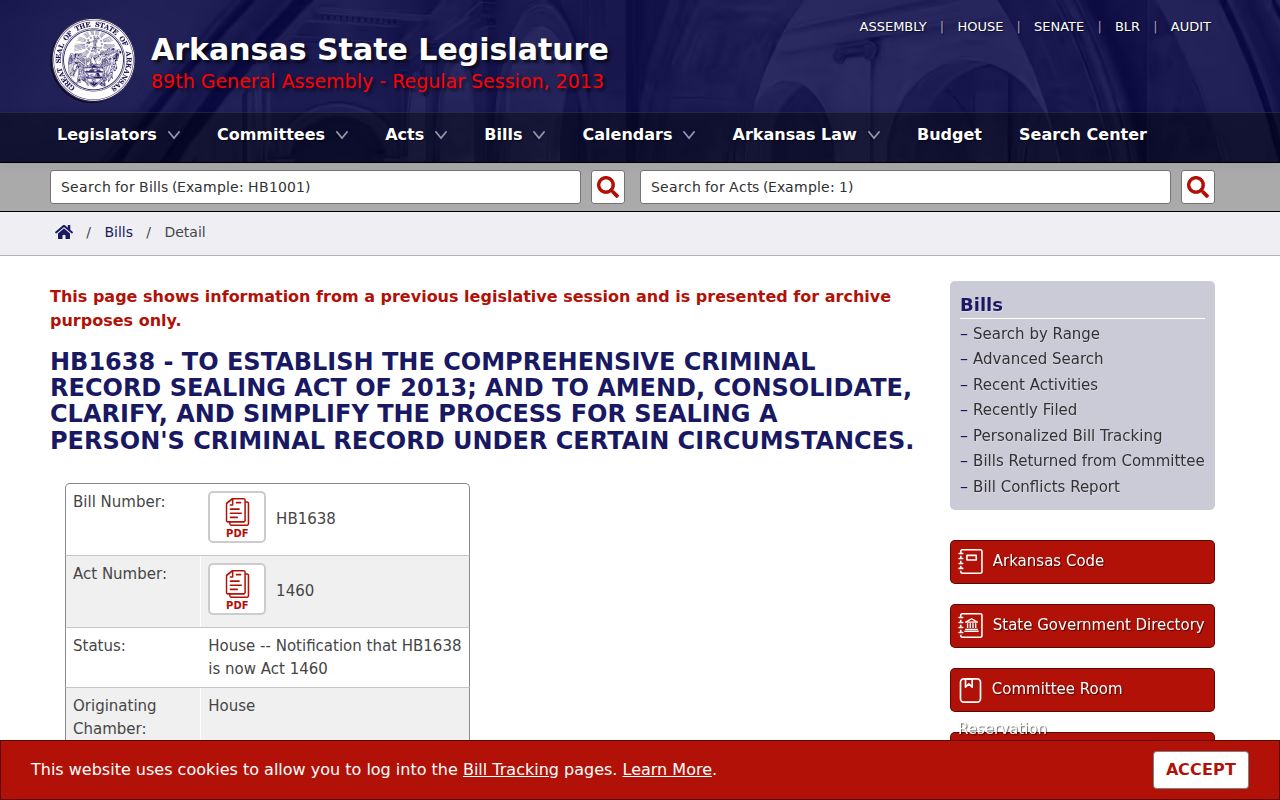
Sealing hides a record from ordinary public view rather than destroying it. The file still exists behind the restriction. That matters when a Search ARCourts query returns nothing. A misspelled name, the wrong court choice, older records, a district outside the system, or a lawful restriction can each explain a zero result. A blank result never proves that no case exists.
Key rules: Administrative Order 19 governs court-record access and exclusions. Administrative Order 19.1 addresses public redaction and sealed unredacted copies. Arkansas Code §§16-90-1401 et seq. governs much adult criminal sealing.
Madison County Criminal Orders Offline
A Madison County docket row marked “None” or with no WEB link is really a request key. Write down the court level, case number, caption, document description, and filing date. Then take that list to Circuit Clerk Tiffany McDaniel's office in person or by phone. A fax number and mailing address are listed too. But nothing local confirms that a fax alone starts a copy order. Ask before you send money or personal details. Cover the method, the current fee, delivery options, identification needs, and timing. The Arkansas Judiciary court forms directory posts current sealing forms. Other statewide materials live there too.
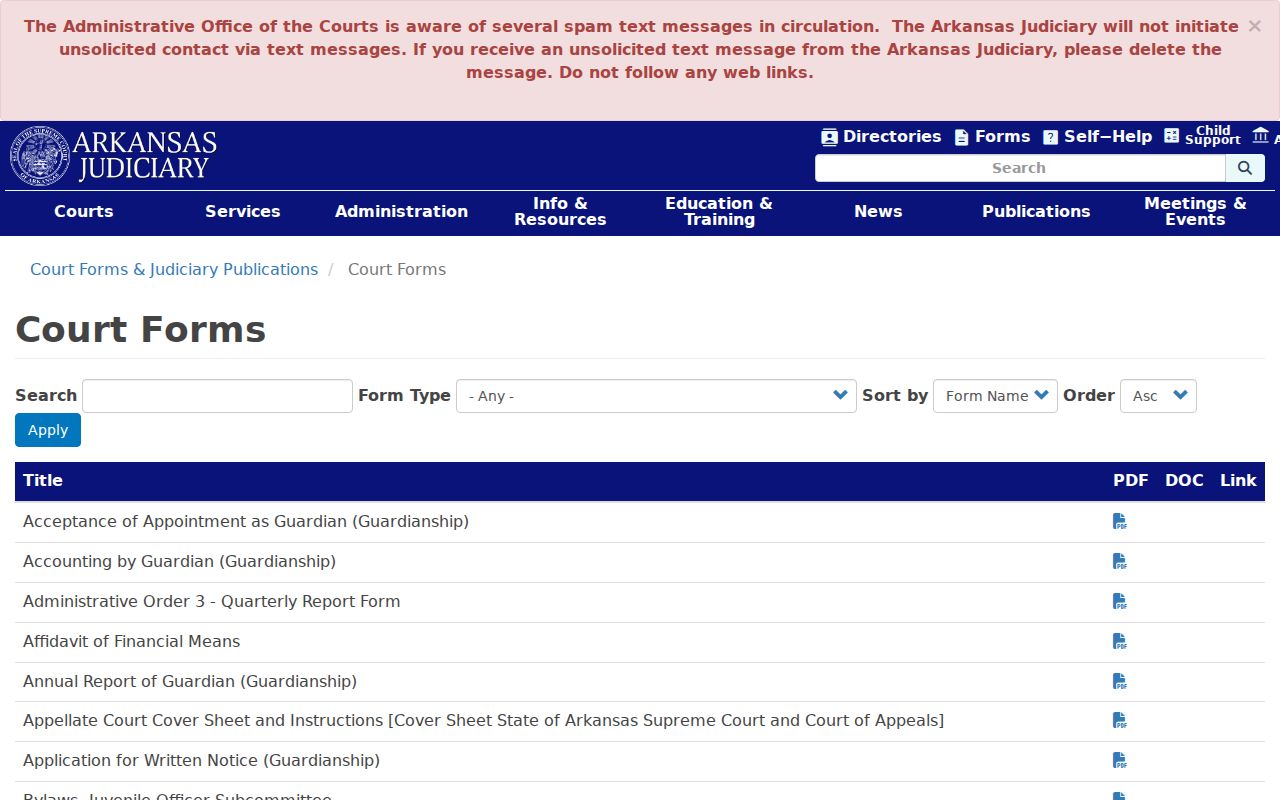
No forms directory replaces the clerk's criminal file itself. Think of it in layers. Search ARCourts gives you the remote index, the counter or phone is the local fallback, mail and fax need advance confirmation, and a certified judgment comes only from the clerk. Neither Madison County court location promises a public lobby terminal, so call before you count on one. Compiled statewide data goes through the judiciary's ORJS process. Individual case documents stay with the local clerk.